







Small Home Gazette, Spring 2024
The Bungalow Jungle
Copyright Erin Hynes, 2006, Reprinted with permission of Northern Gardener magazine, 1755 Prior Avenue N., Falcon Heights, MN 55113.
The Growth of the Bungalow Garden
 Like bungalow houses, bungalow gardens were a reaction to Victorian practices. Symmetrical, high-maintenance, wholly unnatural Victorian gardens required the free time that came with wealth—and a gardener or two. They often boasted bold, exotic plants from Europe and Asia that all but shouted, “No blowsy housefrau could afford ME!” Bedding out was a common practice in Victorian gardens—that is, growing flat after flat of colorful annuals in your own greenhouse (“what’s that, poor dear, you don’t have a greenhouse?”), planting them in uniform beds, and changing out the planting mid-season. Rows of boxwoods were clipped into tidy flat-topped hedges, which might encircle a collection of fussy hybrid tea roses. At the center of it all might be a fountain of the goddess Hebe, pouring water from her pitcher into the pool at her well-sculpted feet.
(Allow me to pause here, Gentle Reader, to say that it’s hard to fault the Victorians—especially the women—for their boisterous gardens. For were I forced to wear corsets and kiss men with waxed handlebar moustaches, you can bet I’d be growing gaudy caladiums and dancing waltzes that grew more and more frenzied until I swooned dead away, my delicate curls tumbling from my topknot provocatively and my alabaster bosom heaving from the exertion.)
By contrast, the bungalow garden was well suited to the owner of a modest urban or suburban home who could not hire a gardener. Most obviously, it was much smaller, encouraging the homeowner to use space economically. For both practical and philosophical reasons, the bungalow garden was about embracing nature, rather than pummeling it into submission. Common features include structures, such as wood arbors and fences, that often showed Japanese influence (for Arts & Crafts designers were not entirely above admiring the exotic); sitting areas accessible from the house’s public rooms; and water features to provide soothing sounds and to attract birds. Plantings were informal and used traditional cottage and native plants, with herbs and vegetable mixed in if the yard was too small for a separate vegetable garden.
 It was a radical change from the Victorian esthetic but doesn’t sound all that different from how we garden now, does it? The Arts & Crafts movement so influenced gardening that we assume its practices have always been around. It reminds me of the college English student who criticized Shakespeare for using so many clichés.
Bungalow Gardens for the New Millennium
 The principles of bungalow gardening are as relevant now as they were 100 years ago. The goal is to create an unpretentious haven for relaxing, appreciating nature, and spending time with loved ones—not a place to toil endlessly. Although that approach seems common sense now, it was radical at the time.
The design elements and suggestions that follow are equally at home in a bungalow garden now as they were then.
Joining the House and Garden
As with the other branch of the Arts & Crafts movement—the Prairie style of Frank Lloyd Wright—the Craftsman style sought to bring people closer to nature by blurring the distinction between outdoors and indoors.
Patios and porches, usually accessible from the kitchen or dining room, still are popular ways of extending living space. A distinguishing trait of bungalow gardens is a wooden pergola made from hefty beams and with exposed joinery. Covered with vines, a pergola creates a shady spot for outside dining and relaxation in the summer. But be sure to choose vines that aren’t messy, lest you end up with debris in your dinner. Litter in your lemonade. Crud in your couscous. You get the idea.
 Window boxes and climbing vines are another way to anchor the house to the garden. Window boxes have the additional perk of making it easy to appreciate the garden close up while indoors. They are notorious for needing frequent watering, so mix in water-absorbing clay pellets sold at garden centers—avoid peat, which sheds water if it dries out. When selecting climbing vines, eschew those with roots that chew up the house, such as English ivy (Hedera helix). Instead, choose more mild-mannered climbers such as Virgin’s bower (Clematis virginiana) and climbing roses, and train them up a trellis.
Speaking of trellises, the ideas of simple design and solid construction carries over to supports such as trellises and arbors, whether made of iron or wood, either unpainted or painted green. Another option is to make them from unpeeled sticks or branches, lashed together.
 Bungalow gates and fences are usually wood, unpainted or painted. They sometimes incorporate decorative tiles or terra cotta plaques, earth crafts much used in Arts & Craft decorating. An alternative to a fence is a wall of heavy stones, perhaps interplanted with thyme or dry-loving alpine plants.
Many Arts & Crafts garden structures echo the lines of Japanese pagodas. Japan reopened to western trade in the 1850s, and the simple design of Japanese garden structures influenced the English pioneers of the nascent Arts & Crafts movement.
Attracting and Observing Nature
To enhance the natural feel of a bungalow garden, tuck modest ponds and fountains in planted areas where both gardeners and birds can enjoy them. To be true to the spirit of the bungalow garden, the fountains are not the spewing centerpieces of the Victorian garden, but little burbling ones that catch the ear long before the eye.
 If ponds and fountains (and their inevitable maintenance) don’t interest you, you still can attract birds with simple stone, ceramic or metal birdbaths. Nestle them near trees, giving birds the chance to dart to safety when the napping cat stirs.
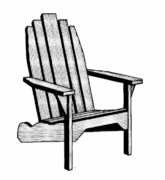
To create spots to enjoy the garden and its visitors, include seating—rustic benches of log or timber are appropriate, as are simple benches and even Adirondack chairs. In traditional bungalow gardens, the curving paths that connect these nooks are pounded earth, brick, gravel or stone.
Adding Art and Accessories
Renewed interest in the Arts & Crafts movement has made it easy to find garden accessories in the style of the era—although one might argue that the mass-produced Arts & Crafts garden lights at Target and Home Depot are not exactly in the spirit of the era.
In selecting statuary, planters and other accessories, keep in mind that bungalows were about using materials and motifs from nature. For materials, think stone and terra cotta; for motifs, trees and leaves. Greek goddesses and pink flamingos? Not so much.
Plants for the Bungalow Garden
 Plants grown in bungalow gardens were often old-timey plants, the kind that neighbors did—and still do—pass along, such as iris (Iris), daylily (Hemerocallis), black-eyed Susan (Rudbeckia hirta) and lambs ear (Stachys byzantina). Annuals and biennials that reseed were also a mainstay, because they did not require replanting each year (although they sometimes require weeding to keep them in check).
Native plants were coming into vogue during the rise of the bungalow garden, thanks to the advocacy of 19th century landscape architect and writer, William Robinson. The benefits of natives go beyond adhesion to an abstract principle; native plants usually are low maintenance and are integral to the vernacular of their region. (Sorry about that, but there’s an unwritten law that any article that touches on architecture has to use the word vernacular at least once. And I don’t want to go to unwritten jail.)
 You don’t have to grow heirloom plants to have a garden in the bungalow tradition, although it is increasingly easy to find seed for them. Modern cultivars of old favorites often have improved pest resistance, although they sometimes lack fragrance and subtle colors of the old-timers.
The emphasis on easy-to-grow and inexpensive (or free) plants is perhaps why the plants and relaxed style of the bungalow garden endured, even though the house style fell out of fashion for 50 years. Many ideals of the Arts & Crafts movement were too idealistic to last, but its garden style is everlasting.
 To learn more about bungalow gardens, I suggest the following:
- Colour Schemes for the Flower Garden by Gertrude Jekyll, illustrated by Charlotte West, 2001, Frances Lincoln
- The Gardens of Gertrude Jekyll by Richard Bisgrove and Andrew Lawson, 2000, University of California Press
- Outside the Bungalow: America’s Arts & Crafts Garden by Paul Duchscherer and Douglas Keister, 1999, Studio Books
For used and antiquarian books about gardening, visit Terrace Horticultural Books, 503 St. Clair, St. Paul. Open by appointment, or call 651-222-5536, email info@terracehorticulturalbooks.com or visit abebooks.com/home/VERANDA.
Recommended Plants
 These lists are not exhaustive but provide a starting point in choosing plants for your bungalow garden.
Annuals
- Alyssum (Lobularia maritima)
- Ageratum (Ageratum houstonianum)
- Bachelor’s button (Centaurea cyanus)
- China pink (Dianthus chinensis)
- Cleome (Cleome hasslerana)
- Cosmos (Cosmos bipinnatus)
- Flowering tobacco (Nicotiana alata)
- Love-lies-bleeding (Amaranthus caudatus)
- Lady’s mantle (Alchemilla mollis)
- Larkspur (Delphinium ajacis)
- Petunia (Petunia x hybrida)
- Snapdragon (Antirrhinum majus)
- Stock (Matthiola incana)
- Strawflower, Everlasting (Helichrysum bracteatum)
- Sunflower (Helianthus annua)
- Zinnia (Zinnia elegans)
Biennials
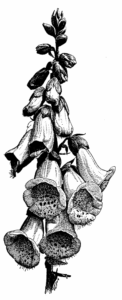
- Foxglove (Digitalis purpurea)
- Hollyhock (Alcea rosea)
 Perennials
- Baby’s breath (Gypsophila paniculata)
- Balloon flower (Platycodon grandiflorus)
- Bellflower (Campanula spp.)
- Bleeding heart (Dicentra spectabilis)
- Chive (Allium schoenoprasum)
- Columbine (Aquilegia)
- Cottage pink (Dianthus pulmaris)
- Shasta daisy (Leucanthemum x superbum)
- Delphinium (Delphinium x alatum)
- Ferns
- Feverfew (Chrysanthemum parthenium)
- Gas plant (Dictamnus albus)
- Iris (Iris spp.)
- Lily (Lilium)
- Lily of the valley (Convalaria majalis)
- Mallow (Malva alcea)
- Peony (Paeonia)
- Spring flowering bulbs such as daffodil and tulip
- Sweet pea (Lathyrus odoratus)
- Wild sweet William (Phlox maculata)
- Yarrow (Achillea millefolium)
Native Perennials
- Bee Balm (Monarda didyma)
- Coneflower (Echinacea purpurea)
- Joe-pye weed (Eupatorium fistulosum)
- Little bluestem (Schizachyrium scoparium)
- Prairie dropseed (Sporobolus heterolepis)
- Switchgrass (Panicum virgatum)
Vines
- Clematis (Clematis spp.)
- Climbing roses (Rosa)
- Moonflower (annual) (Ipomoea alba)
- Morning glory (annual) (Ipomoea tricolor)
- Scarlet runner bean (annual) (Phaseolus coccineus)
Trees and Shrubs
- Barberry (Berberis thunbergii)
- Currant (Ribes spp.)
 Dwarf Fruit Trees
- Elder (Sambucus)
- Flowering crabapple (Malus spp.)
- Hydrangea (Hydrangea spp.)
- Lilac (Syringa vulgaris)
- Serviceberry (Amelanchier hybrids)
- Spirea (Spiraea spp.)
- Sumac (Rhus spp.)
- Viburnum (Viburnum)
- Weigela (Weigela spp.)